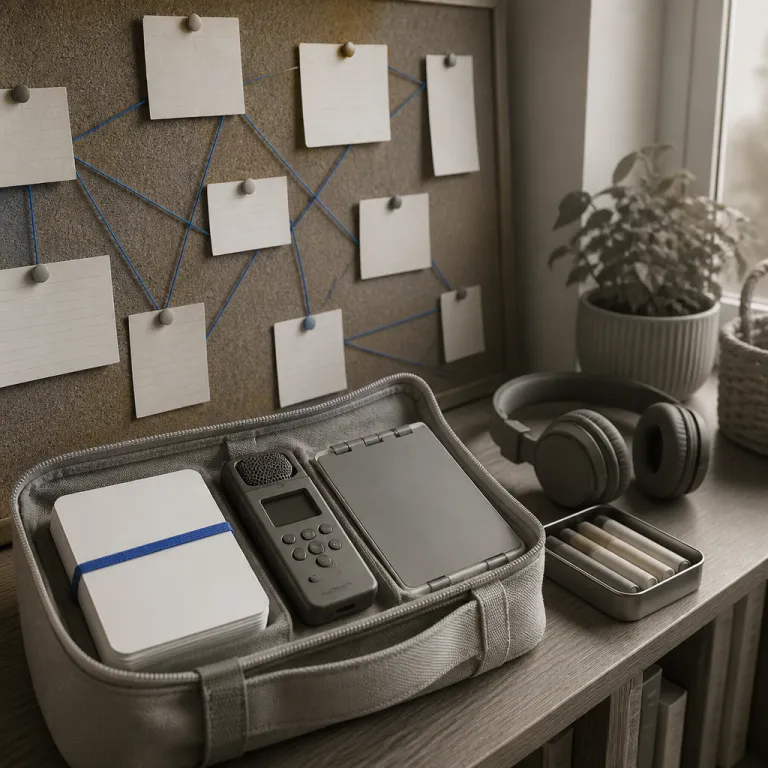
How to build a peer learning network for professional development
Downloadable resources: Peer learning circle agenda and goal-tracking template are included later in this guide so you can copy, adapt, and use them with your own group.
Why a peer learning network beats most formal programs
Continuous learning is usually sold as a catalog of online courses, not as a capability system. For ambitious people who want real learning that compounds, a deliberately built peer learning network for professional development often outperforms one-off courses and school-style workshops. When you treat a learning network as an operating system for your work, you stop chasing certificates and start shipping better decisions.
Think about how people learn at work when no one is watching. They message a trusted peer, scan social media threads, ask their professional network for help, and remix resources from different communities into something usable. That messy flow is already a form of peer learning, but without structure it wastes time and rarely becomes a long-term learning community that supports serious professional learning.
Research on peer learning networks and learning communities in higher education and in school districts shows the same pattern. Meta-analyses of cooperative learning and professional learning communities, such as Johnson, Johnson, and Smith’s work on cooperative learning in higher education and Vescio, Ross, and Adams’ review of professional learning communities in schools, report higher retention, stronger transfer into daily work, and better performance than solo study or lecture-only training. When educators, teachers, and other professionals learn together in small networks, they remember more, apply more, and sustain new practices longer. The same dynamics apply whether you are in a high school environment, a corporate team, or an independent professional building a personal learning network (PLN) for your next career move.
Most LMS vendors still optimize for content distribution, not for community or peer learning. They sell courses, not networks, and they rarely help members build a professional learning network that survives beyond the login screen. If you want a peer learning network for professional development that actually changes your decision making, you will need to design it yourself and treat it as a serious part of your education, not as an optional add-on.
The architecture of a five person learning circle
A powerful peer learning network for professional development does not need scale. It needs a small, committed group of five people who meet regularly, share real work, and hold each other accountable for learning and action. Once you think of this as a micro school for your career, you can design the learning network with the same care that a strong school district uses for its best professional development programs.
Start with frequency and time, because cadence is destiny in any learning community. Bi-weekly sessions of 60 to 75 minutes work well for most professionals, and they are short enough that members can protect the time even during intense work cycles. Many groups add a monthly “lunch and learn” session, either in person or on media platforms, to keep the social fabric strong and to let people learn in a more informal way.
Next, define the format so the peer learning does not drift into vague chat. Use a rotating facilitator model where each member of the PLN takes a turn leading, curating resources, and framing a real learning challenge from their work. This rotation prevents burnout, builds facilitation skills across the learning circle, and reinforces that the learning networks belong to the community, not to one heroic organizer.
Finally, make accountability explicit rather than aspirational. Ask PLN members to set one concrete professional learning goal per cycle, share it with the group, and report back on progress in the next meeting. A simple shared document or form with fields for “goal”, “why it matters”, “actions this week”, and “evidence of progress” keeps this visible. If you lead managers or educators, you can connect this peer learning network to your broader manager-as-coach enablement efforts by aligning goals with the coaching expectations you already set in your organization.
Finding the right peers and setting the focus
The quality of a peer learning network for professional development lives or dies with who is in the room. You want people whose work is adjacent to yours, not identical, because the adjacent expertise effect creates insights that formal education and standard school-style training rarely surface. When people learn from peers in related but different domains, they see new patterns and avoid the echo chamber that often plagues single-function learning networks.
Look for three types of members when you build your learning network:
- Practitioners in your domain who are shipping real work in your field, whether they are educators, product managers, or high school department heads experimenting with new educational models.
- At least one person from a different sector, such as someone working on digital promise style initiatives in public education or someone running a professional network for independent consultants, because cross-pollination accelerates real learning.
- Someone one or two career stages ahead who can act as a near-peer guide and make the network feel like a living map of possible next steps.
That third person does not need to be a formal mentor, but their presence turns the peer learning network into a living map of your next moves and helps your decision making stay grounded in reality. If you are evaluating mentorship, sponsorship, or coaching, you can use this group to apply frameworks from guidance on choosing the right development lever at your current career stage and to test which mix of support actually moves your outcomes.
Once you have your five members, agree on a focus that is narrow enough to matter. “Professional development” is too broad, while “becoming better at data-informed decision making in product and education work” gives your learning community a clear spine. A sharp focus also makes it easier to curate resources, to invite occasional guest educators from your wider professional network, and to keep the PLN aligned over the long term.
Tools, platforms, and rituals that keep the network alive
Technology should facilitate your peer learning network for professional development without turning into another system to manage. The goal is to support human relationships, not to recreate a mini LMS with badges and dashboards that no one checks after the first month. Choose tools that your people already use in their daily work so that participation feels like a natural extension of their existing digital habits.
Slack channels with structured prompts work well for many professionals, especially when combined with a simple ritual like a weekly “wins and stuck points” thread that keeps real learning visible. Discord communities can serve the same purpose for more technical or younger members, while LinkedIn groups with clear entry criteria help you connect with educators, teachers, and other professionals across different school districts and sectors. Cohort-based platforms such as Circle or Mighty Networks can host more formal learning networks, but only if you keep the focus on peer learning and avoid the temptation to overload members with content.
Social media and other media platforms are useful for discovery and light-touch engagement, but they rarely provide enough psychological safety for deep professional learning. Use them as the top of the funnel for your professional network, then invite promising contacts into your smaller learning community once trust has started to form. Over time, your PLN can become a hub that connects multiple networks and communities, giving members access to a richer set of education resources without diluting the intimacy of the core group.
Rituals matter as much as tools. Simple practices like rotating who shares a “failure of the month”, running occasional “lunch and learn” sessions with external guests, or doing quarterly retrospectives on how people learn best in the group keep the network alive. A sample 60–75 minute agenda might include: 10 minutes for check-ins and wins, 15 minutes for one member’s real work example, 25 minutes of group problem solving and resource sharing, 15 minutes to set or update individual learning goals, and 5–10 minutes to capture insights and commitments. If you are an international learner navigating visas and cross-border education, you can even use the group to coordinate with specialized legal and educational support so that your continuous learning plans remain viable across countries.
Measuring value and avoiding the common failure modes
A peer learning network for professional development is only worth your time if it changes your behavior. You are not aiming for more hours logged in a learning platform, but for better decisions, stronger work, and a more resilient professional identity. That means you need simple, honest ways to measure whether the learning network is delivering value for its members.
Start with leading indicators that you can feel in your day-to-day work. Are you shipping projects faster because you can tap the community for targeted help instead of searching alone for generic resources? Are you making clearer decision-making trade-offs because peers challenge your assumptions, share their own educational experiences, and point you to specific education resources that match your context?
Then look at lagging indicators over the long term, such as promotions, role changes, or successful transitions into new fields like high school to university pathways or school district to edtech roles. Track how often insights from the learning community show up in your performance reviews, stakeholder feedback, or client results, because that is where real learning becomes visible. If you see no trace of the network in your work outcomes after several months, you either have the wrong focus, the wrong members, or a format that does not support serious professional learning.
Most peer learning networks fail for boring reasons. They grow beyond eight members, which kills intimacy and lets people hide, or they never set a clear topic, so sessions drift into generic talk about work and life. Others rely on one heroic organizer instead of rotating facilitation, so that person burns out and the professional network quietly dissolves, leaving members wondering why such a promising learning network faded just when people learn to trust each other.
Using mentorship style structures inside your peer network
Mentorship programs often feel inaccessible to people outside elite companies or formal education systems. A well-designed peer learning network for professional development can replicate many of the benefits of mentorship while remaining lightweight, flexible, and fully under your control. The key is to embed mentorship-like structures into the way your learning community operates, rather than waiting for a single mentor to appear.
One practical move is to pair members for rotating “learning partnerships” that last six to eight weeks. Each pair meets briefly between full group sessions to help each other apply insights, to share resources tailored to their current work, and to keep long-term goals visible when daily tasks threaten to crowd them out. Over time, these partnerships create a web of support that feels similar to a mentorship program, but with more reciprocity and less hierarchy.
You can also invite occasional external mentors into your peer learning network for focused sessions. For example, a school leader working on digital promise style initiatives could join a “lunch and learn” to share how their school district builds professional development that actually changes classroom practice. A student visa specialist might join another session to explain how international students can align legal constraints with continuous learning plans, giving members concrete guidance that connects policy, education, and career strategy.
As your PLN matures, you will notice that different members naturally take on mentor-like roles in specific domains. One person becomes the go-to for social media strategy, another for data-informed decision making, another for navigating complex organizational politics in large educational networks. When you see this pattern, name it explicitly, celebrate it as real learning in action, and keep reminding the group that the ultimate metric is not hours logged, but capability shipped.
FAQ
How many people should be in a peer learning network
For most professionals, a peer learning network works best with five to eight members. Fewer than four limits diversity of perspectives, while more than eight makes it easy for people to hide and reduces psychological safety. You can always participate in several small learning networks rather than one large community if you need broader exposure.
How often should a learning circle meet to stay effective
A bi-weekly cadence balances momentum with realistic time constraints for busy professionals. Sessions of 60 to 75 minutes allow enough depth for real learning without overwhelming calendars. Some groups add a monthly “lunch and learn” to maintain social connection and informal peer support.
What is the difference between a peer learning network and a mentorship program
A mentorship program usually centers on a one-to-one relationship with a more senior person. A peer learning network distributes expertise across members and relies on reciprocity, rotating facilitation, and shared accountability for learning. Many professionals blend both approaches by using their peer network to interpret and apply advice from individual mentors.
How can I measure whether my peer learning network is worth the effort
Look for concrete changes in your work, not just in your notes. You should see faster problem solving, better decision making, and more confidence tackling unfamiliar challenges because you can draw on the community. Over the long term, track promotions, role changes, and successful projects that you can trace back to insights or support from the network.
Where can I find peers to start a learning network if my company offers little support
You can start with existing contacts on LinkedIn, alumni from your university or high school, or colleagues from past roles who share your learning goals. Professional associations, online communities for educators or specific professions, and cohort-based courses are also fertile ground for meeting potential members. The key is to look for people who are actively learning and shipping work, not just collecting credentials.
Case study: a five-person peer learning network in action
Consider a small peer learning network formed by five professionals: two high school educators, a product manager in edtech, a school district instructional coach, and an independent consultant. They met bi-weekly for 75 minutes over six months with a focus on “data-informed decision making in education and product work”.
They used the agenda and goal-tracking template from this guide. Each cycle, members set one specific learning goal, such as “run and debrief three A/B tests on our onboarding flow” or “pilot a new formative assessment routine in my ninth-grade class”. During sessions, one person shared a live challenge, the group co-designed experiments, and everyone left with one concrete action.
After six months, two members reported promotions that they explicitly linked to projects shaped in the learning circle, and the educators documented higher student engagement in classes where new practices were tested. While this is a single example rather than a controlled study, it illustrates how a small, focused peer learning network can translate directly into better work and visible career progress.
Downloadable templates: agenda and goal tracker
You can copy and adapt the following templates into your preferred tool (Docs, Notion, or any shared workspace) to run your own peer learning network for professional development.
Peer learning circle agenda (60–75 minutes)
- 0–10 minutes: Check-ins, wins since last session, quick review of goals.
- 10–25 minutes: One member presents a real work example or current challenge.
- 25–50 minutes: Group problem solving, resource sharing, and experiment design.
- 50–65 minutes: Each member sets or updates one learning goal for the next cycle.
- 65–75 minutes: Capture insights, commitments, and next facilitator; confirm next date.
Goal-tracking template (one row per member per cycle)
- Goal
- Why it matters
- Actions this week
- Evidence of progress
- Support requested from the peer learning network
Keep this document open during each meeting so that your learning community can see progress over time and hold each other accountable for real professional development, not just good intentions.